
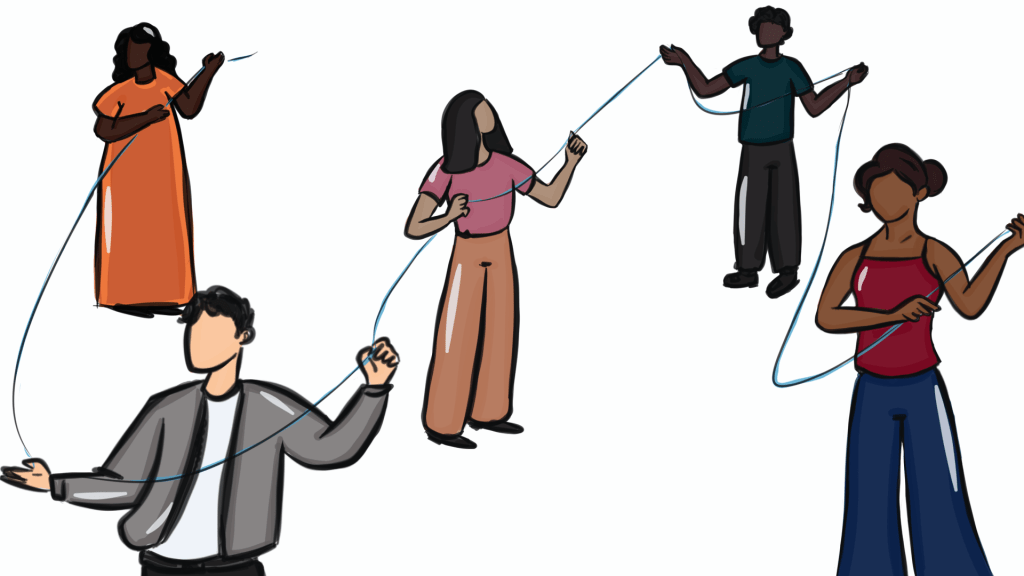
In mid-2023, technologists, researchers, trainers and gender experts who had spent years navigating digital safety, gender justice, and human rights began to recognize the potential of deeper collaboration, grounded in shared practice and lived experience.They were gaining greater influence within their communities, moving beyond the frameworks that had shaped their earlier work and toward more adaptive, context-responsive approaches.
Individually, they began forming new local & regional connections, prompting questions about how knowledge and expertise could be exchanged with different groups & experts within their own countries and across regions.
- Could the experience that had been built be shared with groups just starting out?
- Were experiences of technology-facilitated gender-based violence similar across SWANA, East Africa, and Sub-Saharan Africa?
- Are there other groups working on digital safety, knowledge creation, and support for vulnerable communities that we had not yet come across?
Through our work we identified a significant knowledge gap among networks, organizations, women human rights defenders (WHRDs), and human rights defenders (HRDs). In response, we began providing ongoing voluntary technical and knowledge support from mid-2023 onward.
Our network responds to technology-facilitated gender-based violence (TFGBV), anti-rights tactics, phishing linked to human trafficking, and related digital threats through a combination of community-rooted digital resilience strategies and feminist knowledge-building. We provide gender-sensitive digital safety support, develop tools for TFGBV response, and deliver targeted workshops for high-risk communities. By documenting lived realities, co-creating survivor centred security practices, and strengthening South–South knowledge exchange, we build the capacity of local communities to prevent, withstand, and collectively respond to digital and hybrid threats.
 shiftsouth.org